
Book Pass N1 within 20 days
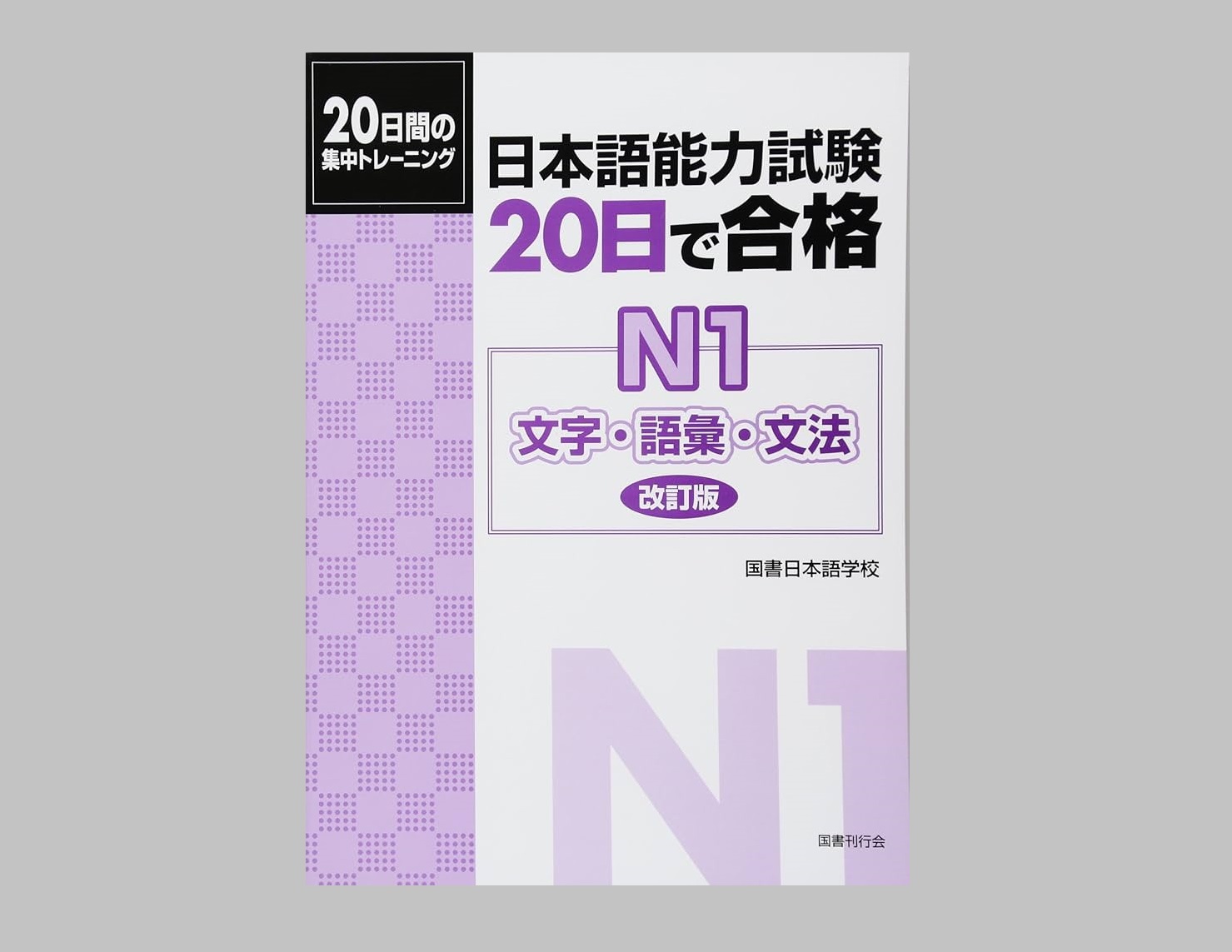
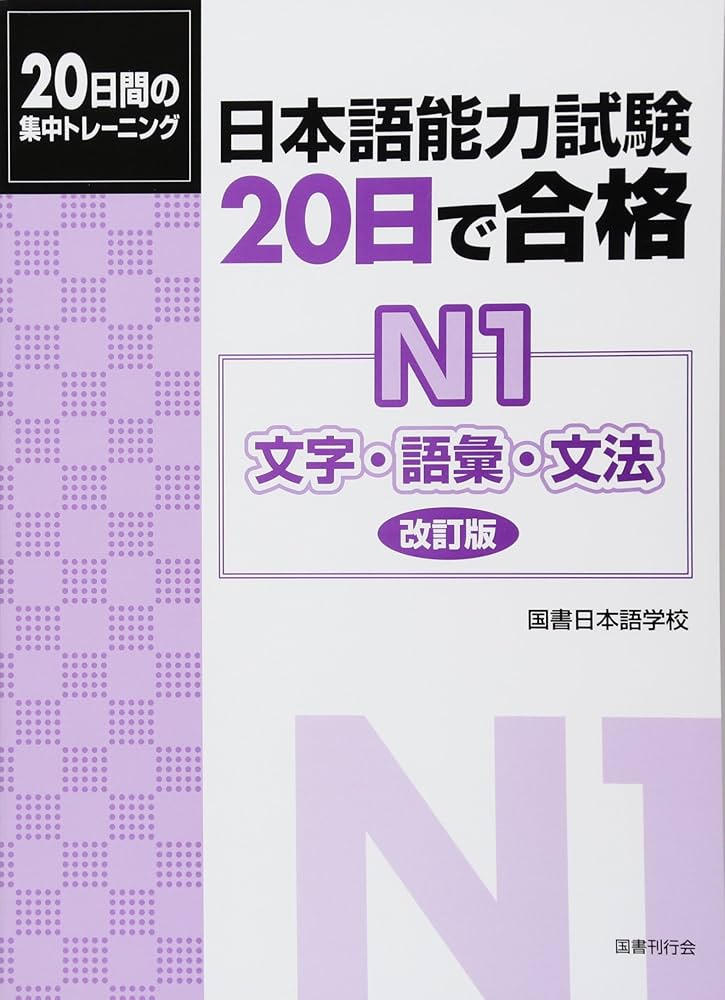
20日で合格N1: A Focused 20-Day Study Guide for the JLPT N1
Passing the Japanese Language Proficiency Test N1 is an important milestone for advanced Japanese learners. As the highest level of the JLPT, N1 requires much more than simply memorizing vocabulary and grammar patterns. Test takers must be able to understand complex written passages, follow naturally spoken Japanese, recognize subtle differences in meaning, and process information quickly under strict time limits.
For many learners, preparing for the JLPT N1 can feel overwhelming. The amount of vocabulary is large, the reading passages are long, and many grammar expressions have similar meanings. Even students who can communicate comfortably in Japanese may struggle with the formal language, abstract topics, and carefully designed answer choices that appear on the exam.
20日で合格N1, which can be translated as “Pass the JLPT N1 in 20 Days,” is designed for learners who want a short, organized, and intensive preparation plan. Instead of studying without a clear direction, the book helps learners divide their review into manageable daily sessions. Its 20-day structure can be especially useful for students who are approaching the exam date and need a practical study schedule.
The idea behind the book is not that a complete beginner can suddenly reach N1 level in only 20 days. JLPT N1 normally requires years of Japanese study and regular exposure to advanced reading and listening materials. Rather, the book is best understood as a final review guide for learners who have already studied N1-level content and want to organize, strengthen, and test their knowledge before the examination.
Why JLPT N1 Preparation Requires a Clear Plan
One of the biggest difficulties in preparing for N1 is deciding what to study each day. Learners often collect many textbooks, vocabulary applications, grammar websites, practice tests, and online videos. Although having many resources can be helpful, it can also create confusion.
You may spend one day reviewing grammar, another day learning random vocabulary, and the next day watching Japanese videos without checking whether you are improving in the areas tested on the JLPT. This kind of unstructured study can make you feel busy without giving you a clear sense of progress.
A 20-day study guide provides a more focused approach. Each day becomes part of a larger preparation process. Instead of asking, “What should I study today?” you can follow a predetermined lesson, complete the exercises, review your mistakes, and move to the next stage.
This structure is particularly valuable for busy learners. University students, office workers, parents, and people studying Japanese outside Japan may not have several hours available every day. A clearly organized book can reduce the time spent planning and allow learners to concentrate on actual practice.
Who Should Use 20日で合格N1?
This book is most suitable for intermediate-to-advanced learners who have already completed a significant amount of N1 preparation. You should ideally be familiar with common N1 grammar patterns, advanced vocabulary, kanji, and the general format of the JLPT.
The book may be helpful for:
- Learners taking the JLPT N1 for the first time
- Test takers who previously failed and want a more organized review plan
- Students who understand Japanese but struggle with exam techniques
- Learners who need a final review before the test date
- Busy people who prefer a short and intensive study schedule
- Self-study learners who want daily goals and a clear sense of progress
It can also be useful for learners who have studied with several different N1 textbooks but still feel that their knowledge is disconnected. Following a day-by-day review plan may help bring vocabulary, grammar, reading, and listening skills together.
However, learners who are still studying N3 or N2 material may find the content too difficult. In that case, it is better to build a stronger foundation before beginning an intensive N1 review book.
What Makes the 20-Day Format Useful?
The greatest advantage of the 20-day format is its simplicity. The JLPT N1 covers a wide range of language skills, so preparation can easily become disorganized. By dividing the study process into daily units, the book gives learners a more realistic path toward the exam.
Twenty days is also long enough to create a consistent review routine while remaining short enough to maintain motivation. A study plan lasting several months can sometimes feel endless. In comparison, a 20-day challenge creates a clear beginning and ending.
Every completed day gives the learner a small sense of achievement. This can be important during the stressful period before the JLPT. Instead of constantly worrying about the entire exam, you only need to concentrate on the lesson and exercises for the current day.
The schedule can also make it easier to identify weaknesses. For example, you may discover that you remember grammar expressions but cannot use them effectively in reading questions. You may recognize vocabulary when reading but fail to understand it during listening practice. Identifying these problems early allows you to adjust your remaining study time.
More Than Memorizing Vocabulary and Grammar
JLPT N1 preparation is not only about knowing more Japanese words. The exam tests whether you can understand how language is used in context.
In vocabulary questions, several answer choices may appear similar, but only one fits the sentence naturally. Grammar questions may include expressions with almost identical translations but different levels of formality, nuance, or usage. Reading questions often require you to identify the writer’s opinion, understand the relationship between ideas, or recognize information that is suggested rather than directly stated.
Listening can be equally challenging. Speakers may change their plans, correct themselves, or mention several possibilities before reaching a final decision. Learners must listen carefully and remember the specific information requested by the question.
For this reason, a good N1 study routine should combine knowledge review with timed practice. It is not enough to recognize the correct answer after thinking for several minutes. During the real examination, you must understand the question, compare the options, and make a decision quickly.
A structured book such as 20日で合格N1 can support this process by encouraging regular practice and helping learners become more comfortable with advanced Japanese under exam conditions.
How to Use the Book Effectively
To get the most benefit from the book, try to study at approximately the same time every day. Consistency is more important than studying for many hours on one day and then doing nothing for several days.
Before beginning each daily lesson, briefly review the mistakes from the previous day. Do not simply check the correct answer and continue. Ask yourself why your answer was incorrect.
Was there a vocabulary word you did not know? Did you misunderstand the grammar? Did you read the sentence too quickly? Did you choose an answer because it looked familiar rather than because it matched the context?
Keeping a mistake notebook can make the 20-day plan more effective. Write down difficult vocabulary, confusing grammar expressions, useful example sentences, and common question types. Review this notebook regularly, especially during the final days before the test.
You should also combine the book with authentic Japanese exposure. Reading news articles, essays, opinion pieces, workplace documents, and other advanced materials can help improve your reading speed. Listening to Japanese news, interviews, documentaries, and discussion programs can help you become familiar with natural speaking speed and formal language.
The book can provide the structure, but regular contact with real Japanese will strengthen the skills you need to pass N1 and use Japanese beyond the examination.
Is It Really Possible to Pass N1 in 20 Days?
The answer depends on your current Japanese level.
If you have already studied N1 vocabulary, grammar, reading, and listening for several months, 20 days may be enough for a focused final review. It can help you organize what you know, improve your test strategy, and become more confident before the exam.
However, if you are beginning N1 preparation from zero, 20 days will probably not be enough. The N1 level includes a large amount of advanced language that cannot be mastered through short-term memorization alone.
A better way to understand the title is:
Use these 20 days to turn your existing Japanese knowledge into exam-ready performance.
The book should not be viewed as a shortcut that replaces long-term learning. Instead, it can serve as an intensive finishing program that helps learners review important material, recognize weak areas, and prepare mentally for the test.
A Practical Final Review for Serious N1 Learners
20日で合格N1 is a useful option for learners who want a clear and disciplined approach during the final stage of JLPT preparation. Its short-term structure can reduce confusion, encourage daily study, and make the large amount of N1 material feel more manageable.
The book will be most effective when used actively. Complete the exercises without checking the answers first, review every mistake, record unfamiliar language, and repeat difficult questions later. Whenever possible, practice under time limits so that you can improve both accuracy and speed.
Passing JLPT N1 requires patience, consistency, and a strong understanding of advanced Japanese. A 20-day study plan cannot replace years of learning, but it can help you use your remaining preparation time more efficiently.
For learners who already have an N1 foundation and need a final push before the examination, 20日で合格N1 can be a valuable study companion. With a realistic schedule, careful mistake analysis, and daily practice, the book can help you approach the JLPT N1 with better organization, stronger confidence, and a clearer strategy.