
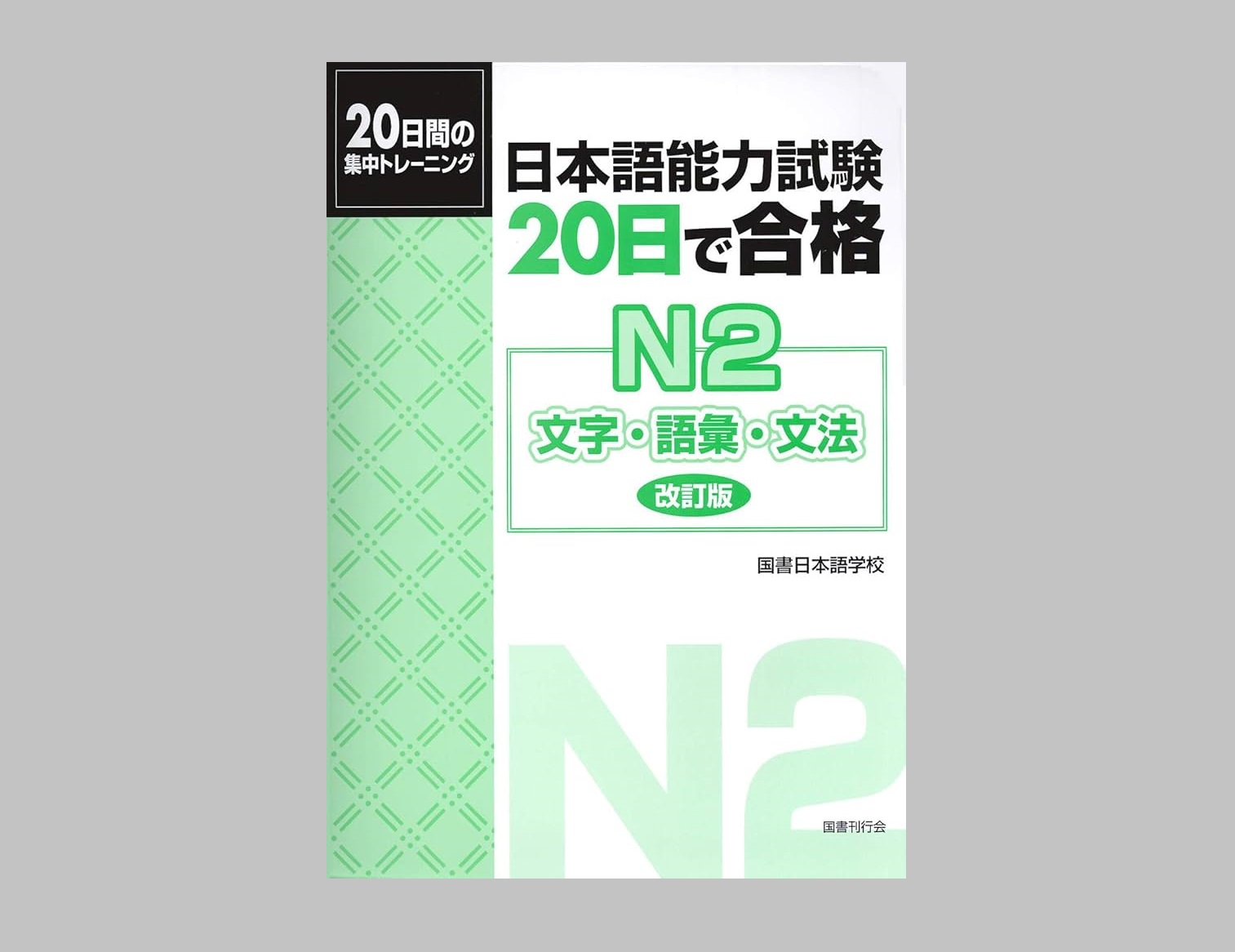
Book Pass N2 within 20 days
Password: unojapano.com
Preparing for the Japanese-Language Proficiency Test can feel overwhelming, especially at the N2 level. Learners are expected to understand a wide range of vocabulary, kanji, grammar patterns, reading passages, and listening situations. Many students spend months studying but still struggle to organize everything they need to review before the examination.
20日で合格N2 is designed for learners who want a clear, focused, and practical way to prepare for the JLPT N2. As its title suggests, the book follows a 20-day study approach that helps learners divide their preparation into manageable daily goals. Instead of trying to review the entire N2 syllabus at once, students can work through the material gradually and maintain a consistent study routine.
The book is especially useful for learners who have already studied intermediate Japanese and need an intensive review before the JLPT. It can also be used by students who understand many N2 concepts but are unsure how to connect them, remember them, or apply them correctly in examination questions.
Why JLPT N2 Is Challenging
JLPT N2 is an important milestone for Japanese learners. It shows that a learner can understand Japanese used in a wide range of everyday and professional situations. However, reaching this level requires more than memorizing individual words or grammar rules.
The examination tests whether learners can recognize vocabulary in context, understand differences between similar expressions, follow the logic of longer reading passages, and identify important information while listening. A student may know the meaning of a word but still answer incorrectly because the word is being used in an unfamiliar sentence or situation.
Time management is another common problem. Even learners with good Japanese ability may struggle to complete the reading section within the available time. Long passages, unfamiliar topics, and similar answer choices can make it difficult to decide which information is important.
For this reason, effective JLPT preparation should include not only language knowledge but also examination practice, reading strategies, careful review, and regular exposure to N2-level Japanese.
A Structured 20-Day Study Plan
One of the main advantages of 20日で合格N2 is its short and structured study period. A 20-day plan gives learners a specific target for each day and makes it easier to stay motivated.
Without a study schedule, students often spend too much time on subjects they already understand while avoiding difficult areas. A daily plan encourages balanced preparation and helps learners review different parts of the examination more efficiently.
The 20-day format can be used in several ways. Learners preparing close to the examination date can follow the plan as an intensive final review. Students with more time can spend two or three days on each lesson, turning the book into a longer study program. It can also be used together with other textbooks, online lessons, flashcards, or mock examinations.
The most important point is consistency. Studying for a shorter period every day is usually more effective than studying for many hours only once or twice a week. A structured plan helps learners build momentum and makes their progress easier to measure.
Building Essential N2 Vocabulary and Kanji
Vocabulary and kanji are essential parts of JLPT N2 preparation. At this level, learners need to understand many words related to work, society, education, communication, news, daily life, and abstract ideas.
Memorizing translations alone is not always enough. Learners should also pay attention to pronunciation, kanji combinations, collocations, common expressions, and the situations in which a word is normally used.
For example, two Japanese words may have similar English meanings but may not be interchangeable. One may be commonly used in conversation, while the other may be more appropriate in formal writing. Understanding these differences is important because JLPT questions often test vocabulary through context.
When using 20日で合格N2, learners should record unfamiliar words and review them regularly. Creating original example sentences can also make new vocabulary easier to remember. Instead of simply memorizing a list, try connecting each word to a situation, image, or personal experience.
Kanji should be studied as part of complete words rather than as isolated characters. This approach helps learners recognize kanji more naturally in reading passages and examination questions.
Understanding N2 Grammar in Context
JLPT N2 grammar includes many expressions that have similar meanings but different levels of formality, nuance, or usage. Learners may recognize a grammar pattern in a textbook but still find it difficult to choose the correct answer in a test.
A useful grammar study method includes four steps:
- Understand the basic meaning of the expression.
- Learn how the expression connects to verbs, nouns, and adjectives.
- Read several natural example sentences.
- Compare it with similar grammar patterns.
Studying grammar in context is especially important. Rather than memorizing only a formula, learners should notice why a particular expression is used and what feeling or relationship it communicates.
When reviewing with 20日で合格N2, it is helpful to write short notes about confusing grammar points. For example, learners can record whether an expression is formal, whether it is commonly used in writing, and whether it expresses a reason, contrast, condition, assumption, or conclusion.
Regular comparison can prevent mistakes when several answer choices look almost identical.
Improving Reading Speed and Comprehension
Reading is one of the most demanding sections of JLPT N2. Learners may encounter notices, advertisements, emails, opinion articles, explanations, and longer passages.
It is not necessary to translate every sentence into English. In fact, translating everything can make reading slower and more confusing. Learners should instead practice identifying the main topic, the writer’s opinion, supporting details, contrasts, causes, and conclusions.
Useful reading habits include paying attention to transition words, checking what pronouns refer to, and identifying the purpose of each paragraph. Words such as しかし, つまり, そのため, and 一方 can reveal how ideas are connected.
After completing a reading exercise, learners should review not only incorrect answers but also the reasons why the other choices are wrong. This helps develop the logical reading skills required for the examination.
Developing Better Listening Skills
The listening section requires learners to understand spoken Japanese at a natural speed. Conversations may include background information, changes of plan, indirect opinions, or several possible actions.
To improve listening ability, learners should focus on the speaker’s intention rather than trying to understand every word. Important information often appears near the end of a conversation, especially when the speakers make a final decision.
Repeated listening is useful. During the first attempt, listen for the general meaning. During the second attempt, focus on important details. During the third attempt, check vocabulary, expressions, and parts that were difficult to hear.
Learners can also improve by listening to Japanese news, podcasts, interviews, dramas, and educational videos. Regular exposure makes natural pronunciation and sentence rhythm feel more familiar.
Who Should Use 20日で合格N2?
This book is suitable for learners who:
- Have already completed most intermediate Japanese material.
- Plan to take the JLPT N2 examination.
- Need a structured final review.
- Have limited time before the test.
- Want to identify weak areas quickly.
- Prefer studying with daily goals.
- Need additional practice alongside another N2 textbook.
However, the title should not be understood as a guarantee that every beginner can pass JLPT N2 after only 20 days. A learner’s result depends on their current Japanese ability, previous study experience, available study time, and consistency.
Students who are still learning basic or lower-intermediate Japanese may need more preparation before using the book as an intensive review guide.
How to Get the Best Results
To use 20日で合格N2 effectively, set aside a regular study period every day. Complete the assigned material, check your answers carefully, and write down the reasons for your mistakes.
Do not simply count how many questions you answered correctly. Try to understand why you selected an incorrect answer. Was the problem caused by unfamiliar vocabulary, grammar confusion, reading speed, or misunderstanding the question?
Reviewing mistakes is one of the most valuable parts of examination preparation.
Learners should also complete at least one timed mock test before the real examination. This helps them become familiar with the test format, manage their time, and understand which sections require more attention.
Final Thoughts
20日で合格N2 provides learners with a focused path toward JLPT N2 preparation. Its 20-day approach can make a large amount of study material feel more organized and manageable.
The book is most effective when used consistently and combined with active review. Learners should practice vocabulary in context, compare similar grammar expressions, develop efficient reading habits, and listen to Japanese regularly.
Passing JLPT N2 requires effort, but a clear plan can make the preparation process less stressful. By studying every day, reviewing mistakes, and concentrating on weak areas, learners can approach the examination with greater confidence.
Whether you are preparing for work, university, life in Japan, or personal achievement, 20日で合格N2 can serve as a practical companion during the final stage of your JLPT journey.

Password on top of the post