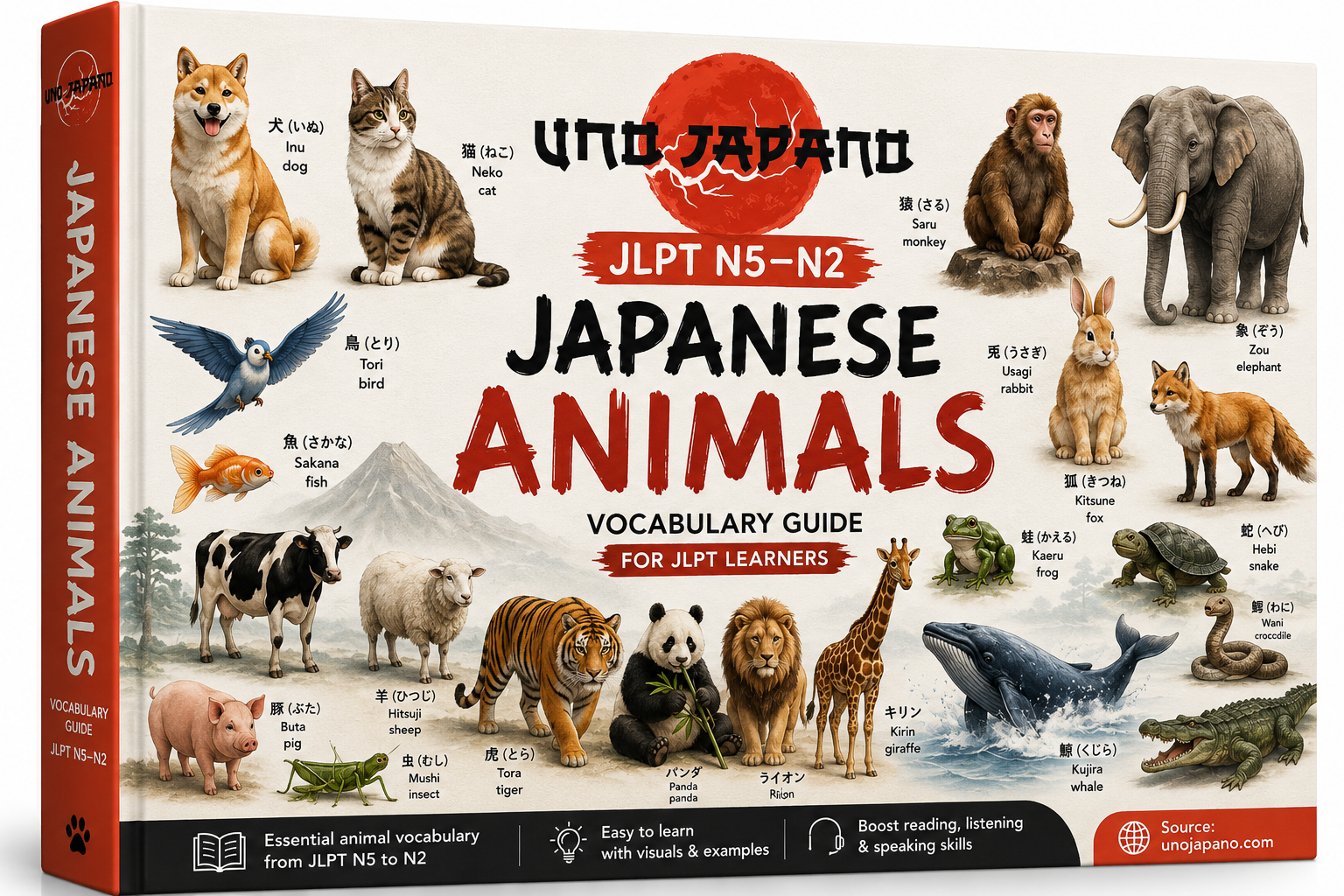
JLPT Animal Vocabulary Guide (N5–N2): 50+ Essential Japanese Animal Names with Kanji, Kana
Animal vocabulary appears surprisingly often in the JLPT. Even if there is no dedicated “animal section” on the exam, animals frequently show up in reading passages, listening conversations, advertisements, children’s stories, news articles, and daily-life topics.
Instead of memorizing dozens of words randomly, it is much easier to group them into categories and learn them visually. In this guide, we’ll organize the most common Japanese animal names from JLPT N5 to N2 and explore useful memory tricks for each group.
1. Beginner Animals (N5–N4)
These are the animals every Japanese learner should know first. They appear frequently in textbooks, conversations, and JLPT beginner-level questions.
犬(いぬ)- Dog
Dogs are one of the most popular pets in Japan. You’ll often hear phrases such as:
- 犬を飼っています。
- “I have a dog.”
Remember:
- 犬 = Dog
- 猫 = Cat
These two are often learned together.
猫(ねこ)- Cat
Cats are extremely common in Japanese culture. From anime characters to famous cat islands, cats appear everywhere.
Example:
- 猫が好きです。
- “I like cats.”
Memory tip:
“Neko” is one of the most famous Japanese words worldwide.
鳥(とり)- Bird
鳥 refers to birds in general.
Example:
- 鳥が空を飛んでいます。
- “A bird is flying in the sky.”
Useful compound words:
- 小鳥(ことり)small bird
- 白鳥(はくちょう)swan
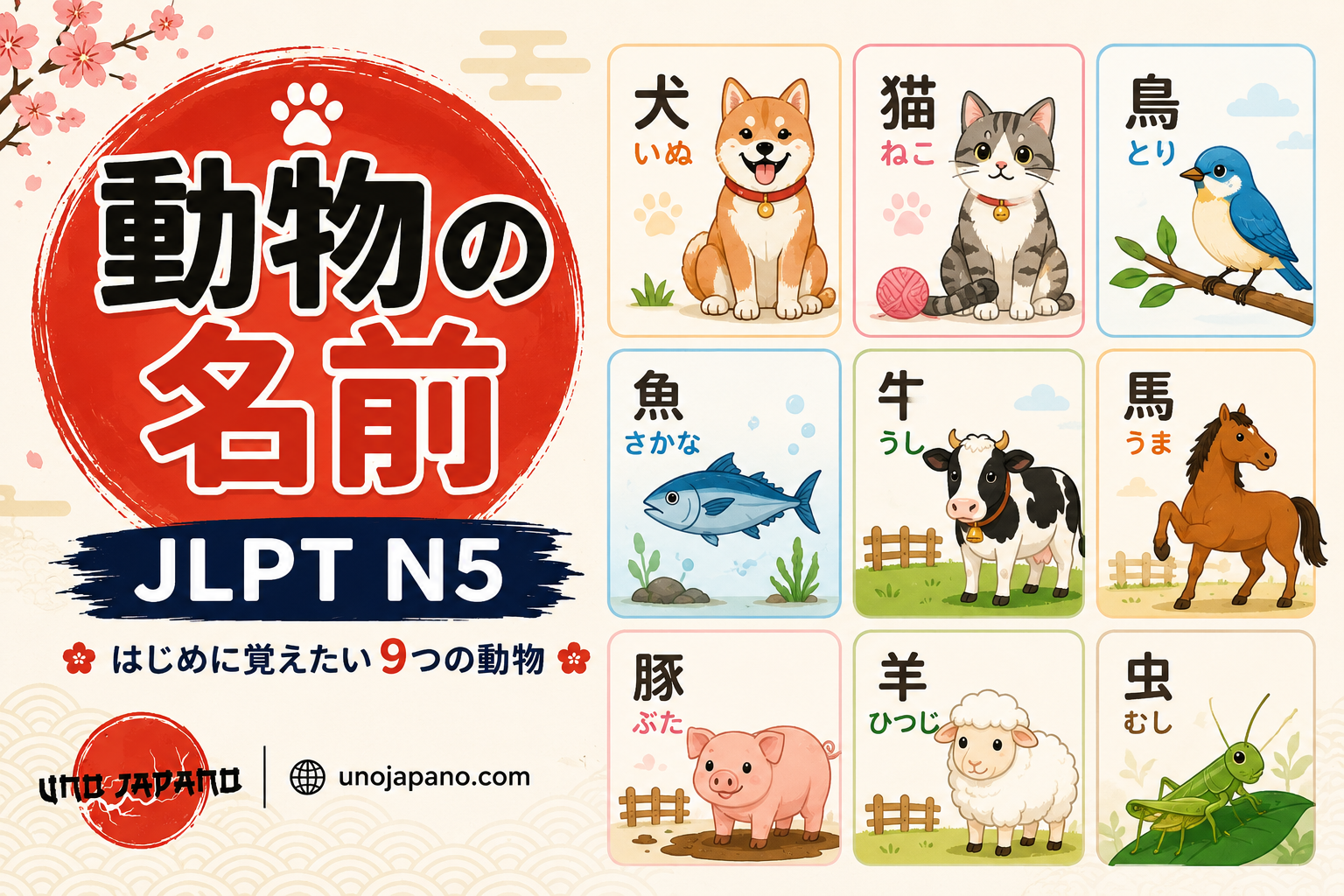
魚(さかな)- Fish
Japan is famous for seafood, so 魚 appears very often.
Example:
- 魚を食べます。
- “I eat fish.”
You’ll see it in restaurant menus and reading passages frequently.
牛(うし)- Cow
Useful for food vocabulary:
- 牛肉(ぎゅうにく)beef
Example:
- 牛は大きい動物です。
- “A cow is a large animal.”
馬(うま)- Horse
Example:
- 馬に乗ります。
- “Ride a horse.”
Fun fact:
The zodiac sign Horse is 午(うま).
豚(ぶた)- Pig
Important food-related vocabulary:
- 豚肉(ぶたにく)pork
Example:
- 豚肉が好きです。
- “I like pork.”
羊(ひつじ)- Sheep
Often appears in zodiac and cultural topics.
Example:
- 羊は毛がたくさんあります。
- “Sheep have a lot of wool.”
虫(むし)- Insect
This word appears surprisingly often in listening exams.
Example:
- 虫が苦手です。
- “I’m not good with insects.”
2. Intermediate Animals (N4–N3–N2)
At higher JLPT levels, learners encounter a wider variety of animals, especially in stories, news, and descriptive passages.
猿(さる)- Monkey
Example:
- 猿が木に登っています。
- “A monkey is climbing a tree.”
象(ぞう)- Elephant
One of the easiest words to remember.
Example:
- 象の鼻は長いです。
- “An elephant’s nose is long.”
Many learners also see the katakana version:
- ゾウ
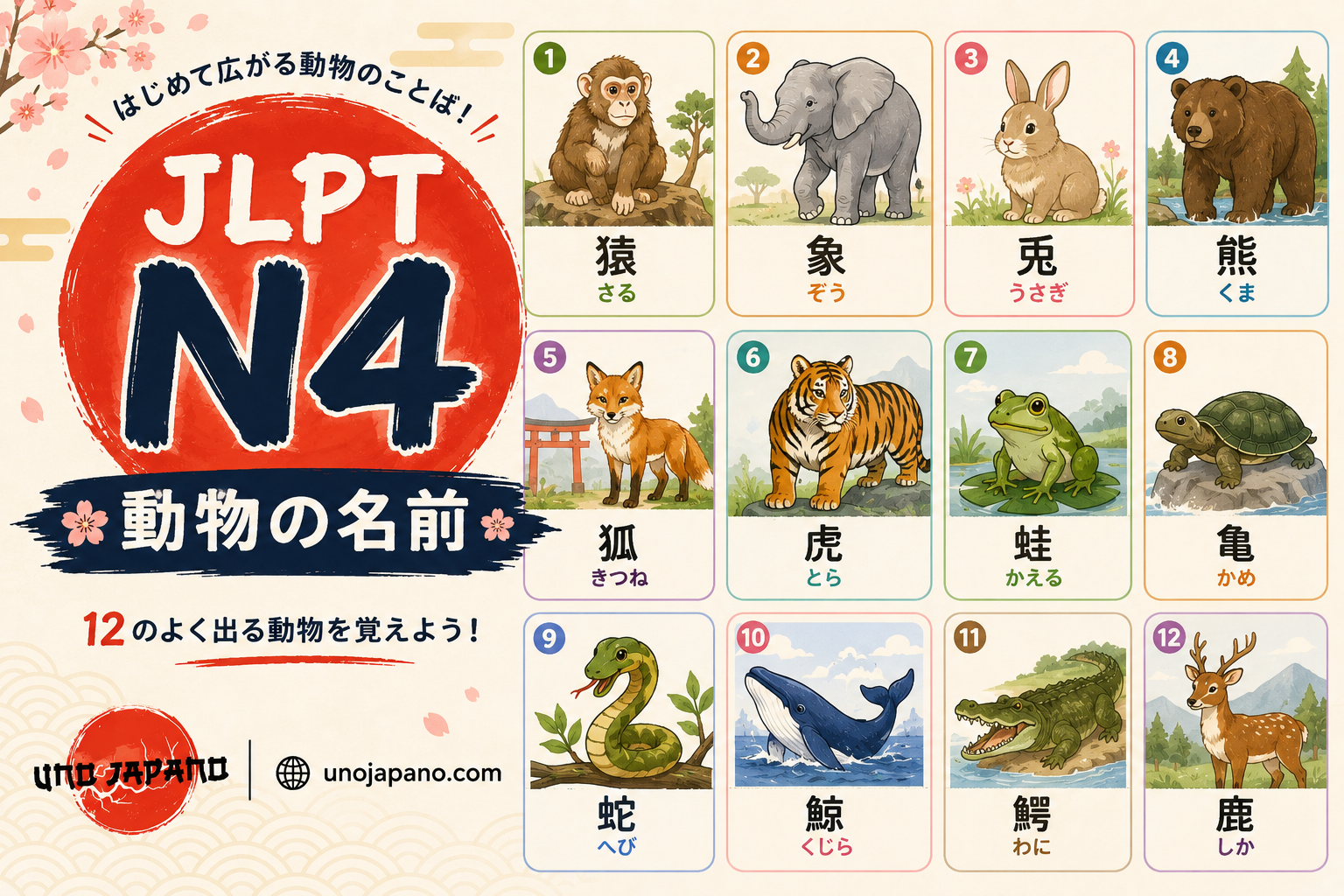
兎(うさぎ)- Rabbit
Usually written in hiragana:
- うさぎ
Example:
- うさぎはかわいいです。
- “Rabbits are cute.”
熊(くま)- Bear
Example:
- 山で熊を見ました。
- “I saw a bear in the mountains.”
Useful because it often appears in travel warnings.
狐(きつね)- Fox
A very important cultural animal.
In Japanese folklore, foxes are believed to possess magical powers.
Example:
- 狐の話を知っていますか。
- “Do you know the fox story?”
虎(とら)- Tiger
Common in zodiac and idioms.
Example:
- 虎は強い動物です。
- “Tigers are strong animals.”
蛙(かえる)- Frog
Usually written:
- カエル
- かえる
Example:
- カエルが鳴いています。
- “A frog is croaking.”
亀(かめ)- Turtle
A symbol of longevity in Japan.
Example:
- 亀は長生きします。
- “Turtles live a long time.”
蛇(へび)- Snake
Example:
- 蛇が草の中にいます。
- “A snake is in the grass.”
鯨(くじら)- Whale
Appears in news and cultural topics.
Example:
- 鯨は海に住んでいます。
- “Whales live in the ocean.”
鰐(わに)- Crocodile
Less common but occasionally appears in reading passages.
Example:
- 動物園で鰐を見ました。
- “I saw a crocodile at the zoo.”
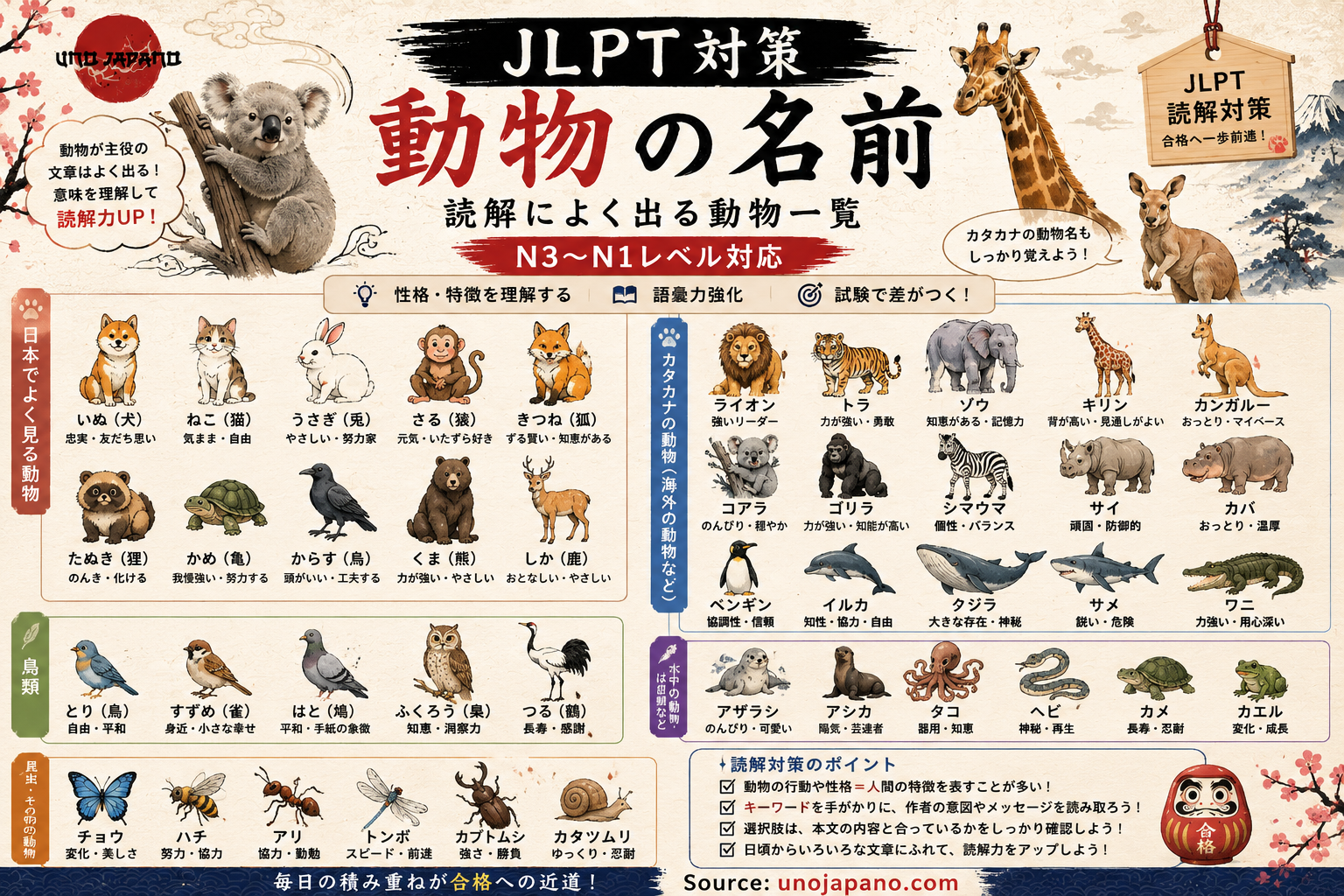
3. Katakana Animals
Many foreign or zoo animals are commonly written in katakana.
These are particularly useful because JLPT listening questions often use them.
| Japanese | English |
|---|---|
| パンダ | Panda |
| ライオン | Lion |
| キリン | Giraffe |
| ペンギン | Penguin |
| コアラ | Koala |
| カンガルー | Kangaroo |
| サイ | Rhinoceros |
| ゴリラ | Gorilla |
| チーター | Cheetah |
| シマウマ | Zebra |
| フラミンゴ | Flamingo |
Memory trick:
If an animal is not native to Japan, there is a high chance its name will be written in katakana.
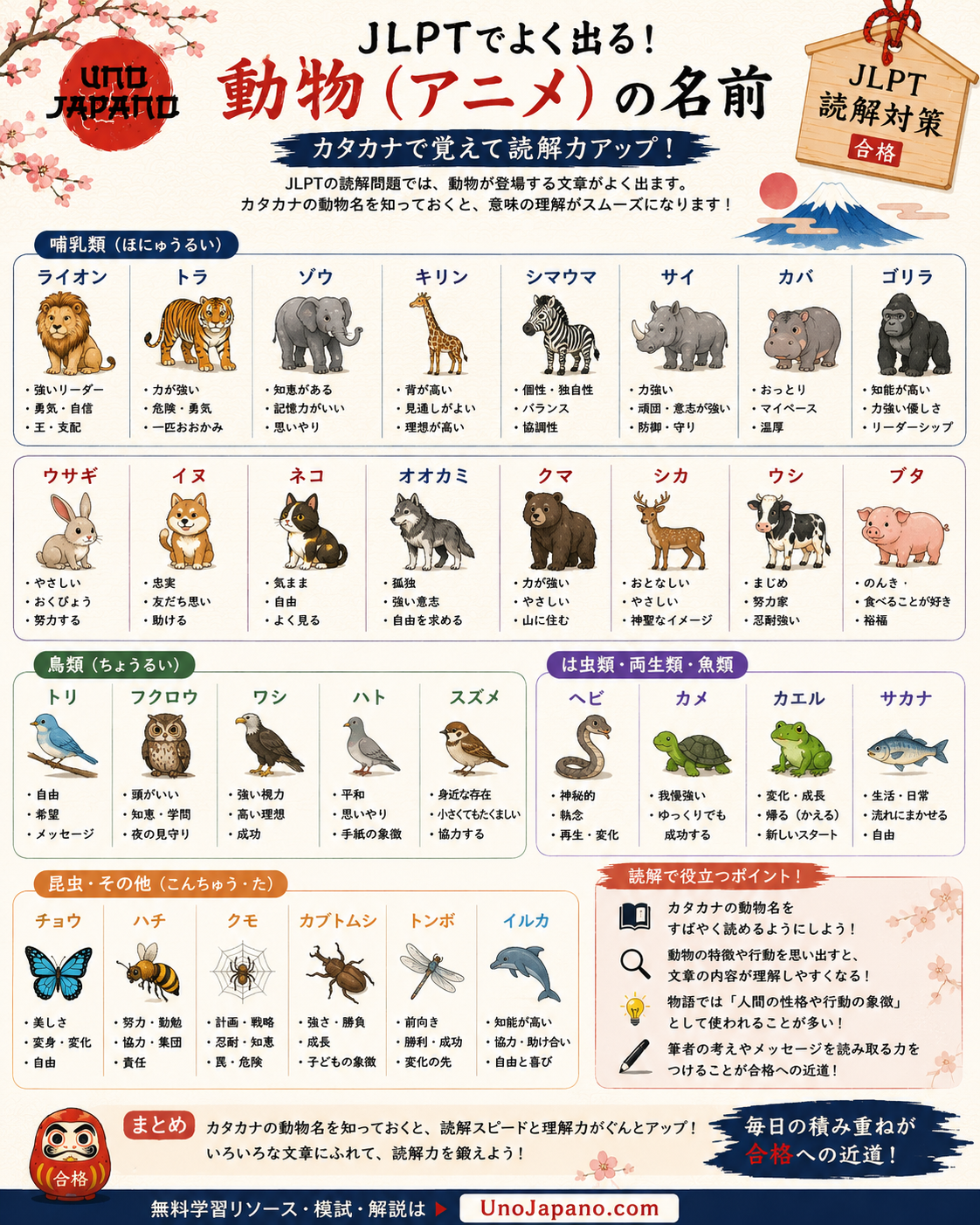
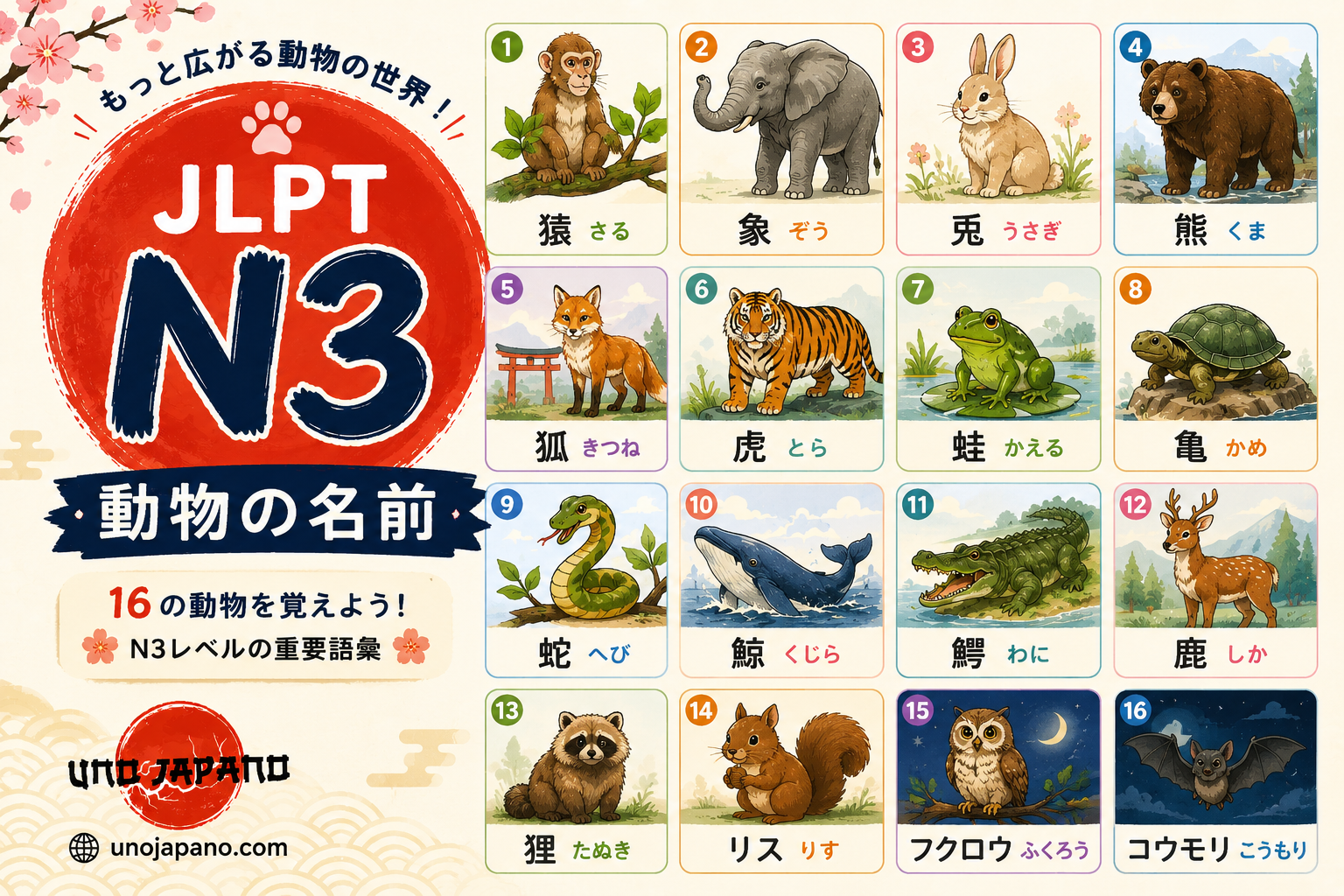
4. Animals Commonly Seen in JLPT Reading
These animals appear regularly in stories and reading passages.
鹿(しか)- Deer
Especially famous in Nara.
狸(たぬき)- Raccoon Dog
A classic Japanese folklore animal.
リス – Squirrel
Often appears in children’s stories.
フクロウ – Owl
Common in nature-related readings.
コウモリ – Bat
Appears in seasonal and science topics.
イルカ – Dolphin
Frequently used in aquarium-related passages.
サメ – Shark
Common in documentaries and news.
アザラシ – Seal
Popular in zoo and aquarium contexts.
カワウソ – Otter
Increasingly common in modern media.
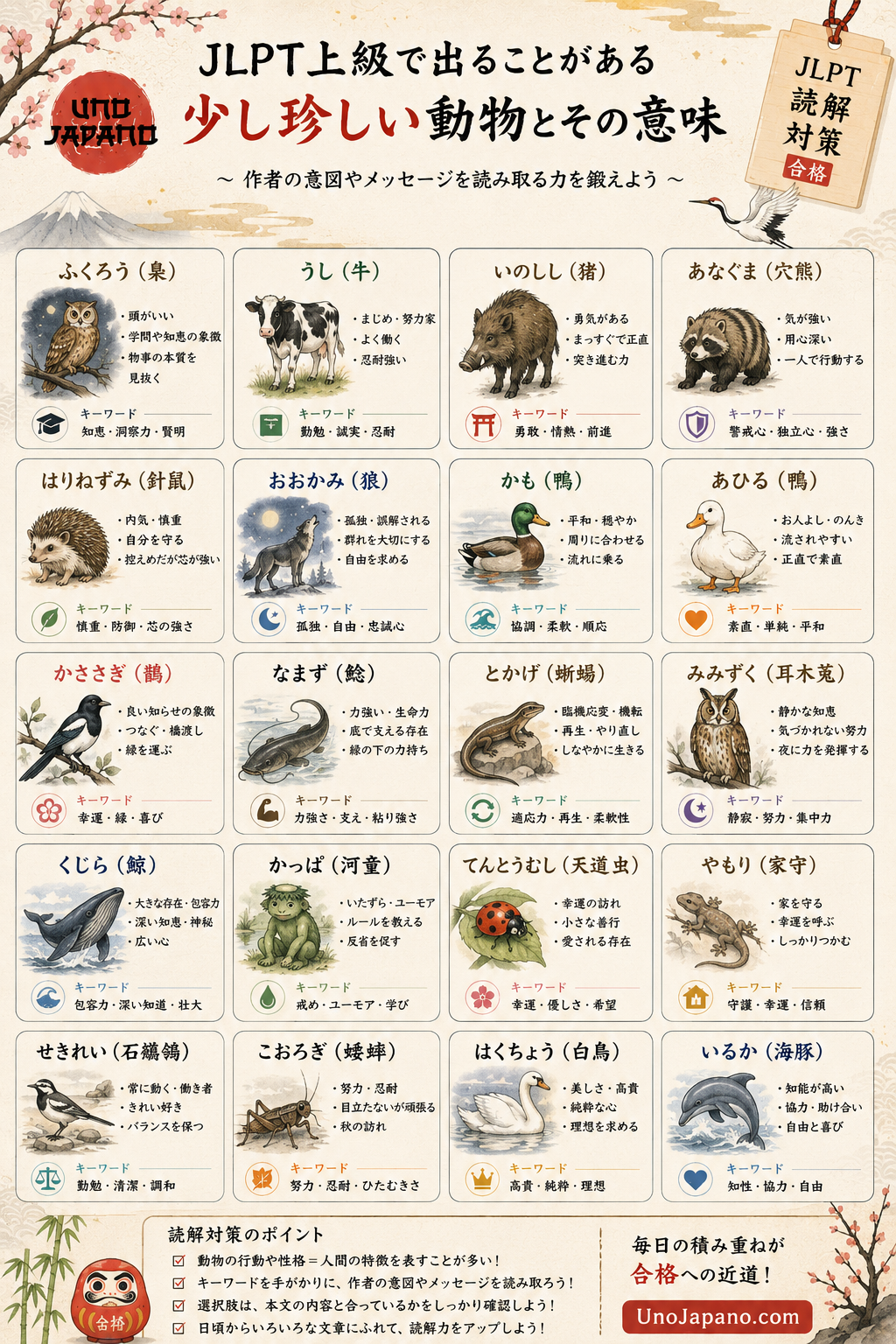
5. The Easiest Way to Memorize Animal Vocabulary
Instead of learning animals alphabetically, group them by category:
Pets
- 犬
- 猫
- うさぎ
Farm Animals
- 牛
- 馬
- 豚
- 羊
Forest Animals
- 熊
- 狐
- 猿
- 鹿
Ocean Animals
- 魚
- 鯨
- イルカ
- サメ
Birds
- 鳥
- フクロウ
- オウム
- コウノトリ
Reptiles & Amphibians
- 蛇
- 亀
- 蛙
- 鰐
Grouping vocabulary like this mirrors how our brains naturally organize information, making recall much faster during the JLPT.
Final Challenge
Can you say these 10 animals in Japanese without looking?
🐶 Dog
🐱 Cat
🐰 Rabbit
🐻 Bear
🦊 Fox
🐸 Frog
🐢 Turtle
🐍 Snake
🐳 Whale
🦁 Lion
If you can answer all ten confidently, you’re already covering most of the animal vocabulary commonly encountered from JLPT N5 to N2.
頑張ってください! (Good luck with your JLPT studies!) 🐾📚🇯🇵
P/s: It’s very kind of you to share our Website but not only the screenshot. Thank you.
Join us for latest JLPT Answers at:
1/ Telegram Channel https://t.me/unojapano/
2/ Telegram Group Chat https://t.me/jlptlearnjapanesewithunojapano/
3/ Facebook Channel https://www.facebook.com/unojapano/
4/ Facebook Community https://www.facebook.com/groups/unojapano/
5/ Follow us via Twitter https://x.com/unojapano/