

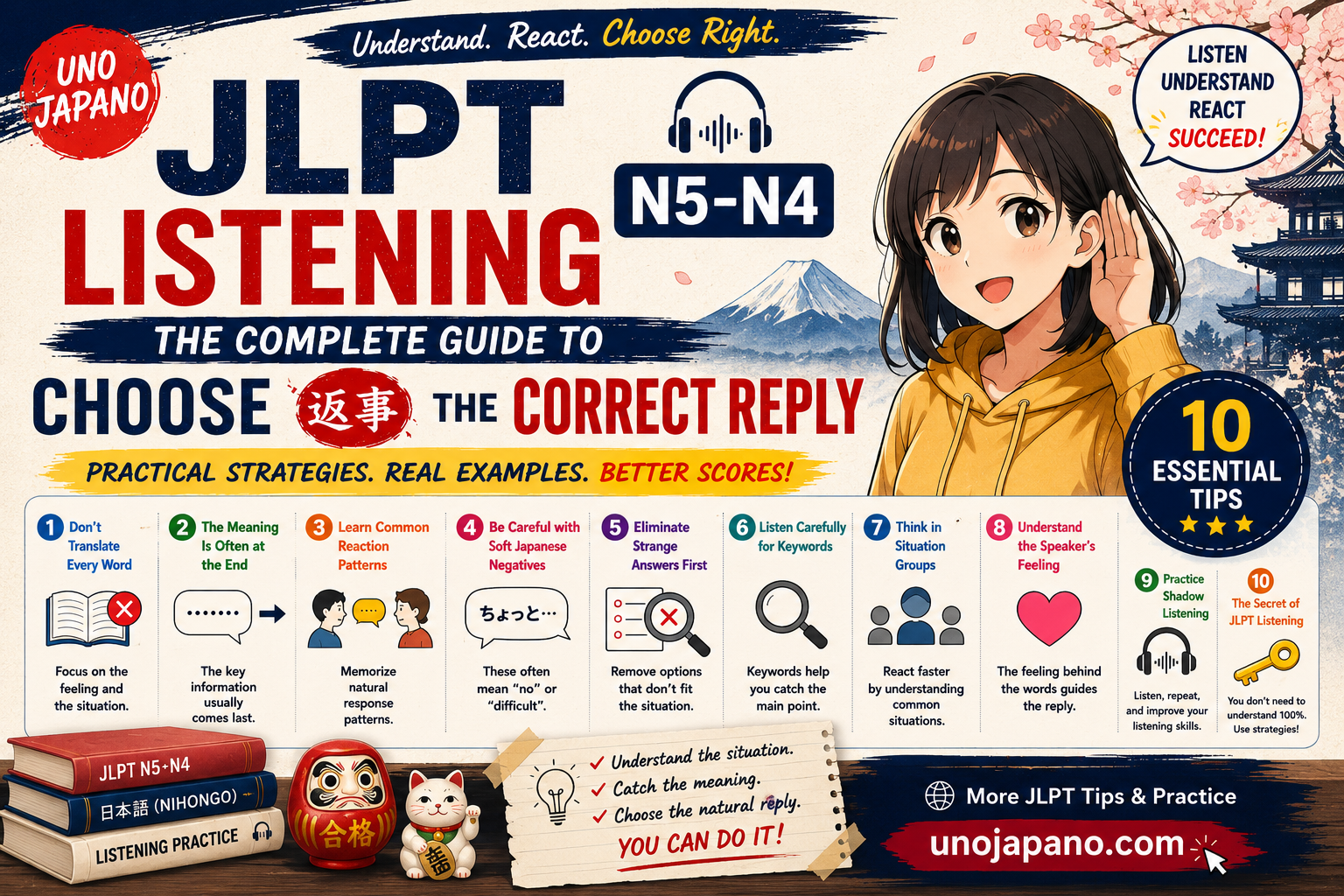
How to Choose the Correct Reply in 「返事」 Questions
Many Japanese learners say the same thing after taking the JLPT listening test:
“I understood some words… but I still couldn’t choose the correct answer.”
Especially in the 「返事」 section, the problem is usually not vocabulary.
The real difficulty is understanding:
- the situation
- the speaker’s intention
- the natural Japanese reaction
The good news is:
You do NOT need to understand 100% of the conversation to answer correctly.
For N5–N4 level, learning common response patterns is much more important.
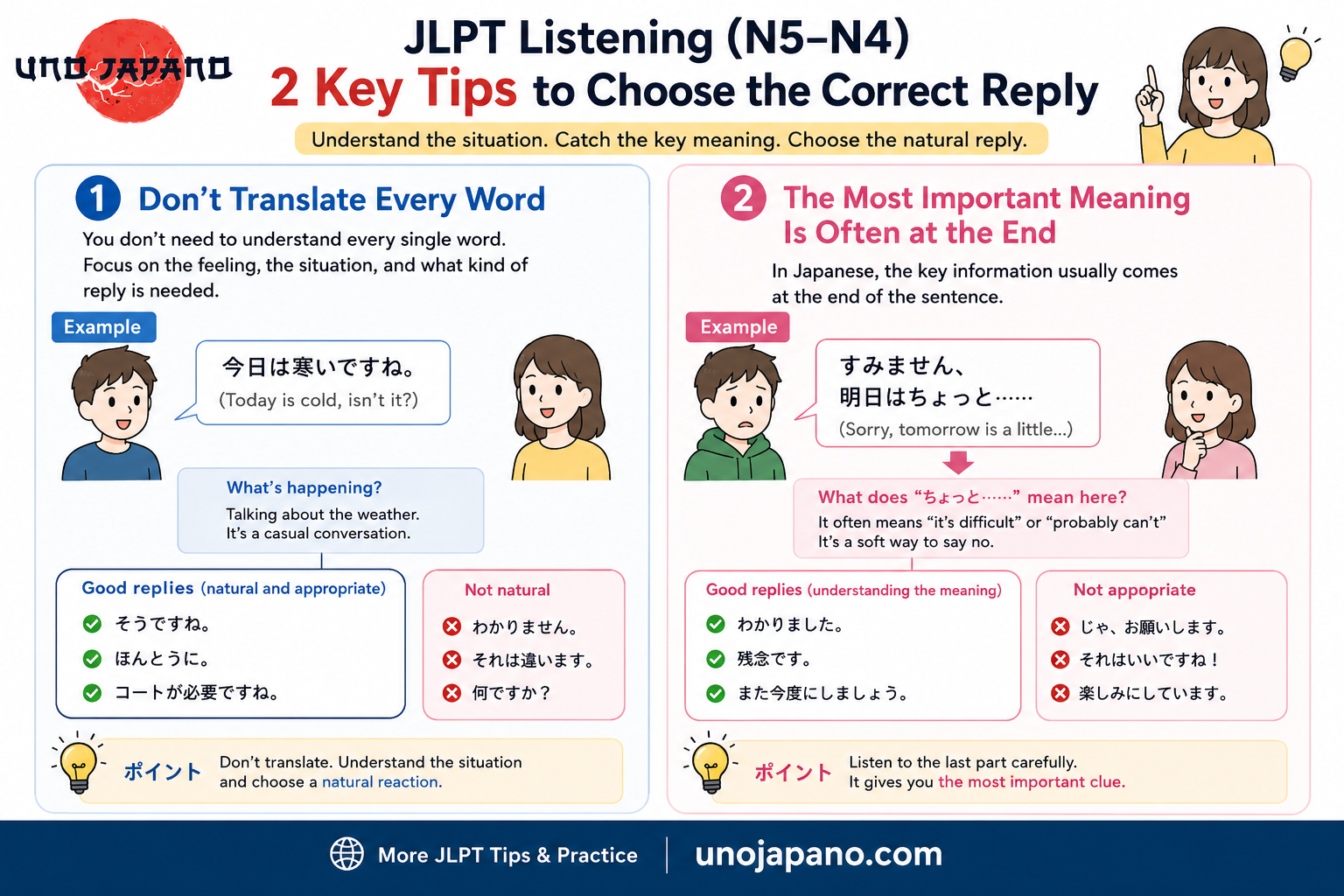
1. Don’t Translate Every Word
One of the biggest mistakes beginners make is trying to translate everything into their native language while listening.
Japanese listening is too fast for that.
Instead, focus on:
- the feeling
- the situation
- what kind of reply is needed
Example
A:
「今日は寒いですね。」
You do not need difficult grammar analysis.
The speaker is simply making conversation about the weather.
Natural replies are:
- 「そうですね。」
- 「ほんとうに。」
- 「コートが必要ですね。」
The JLPT wants to check whether you understand natural communication, not perfect translation.
2. The Most Important Meaning Is Often at the End
In Japanese, the key meaning usually comes near the end of the sentence.
This is extremely important in listening.
Example
「すみません、明日はちょっと……」
Even if you miss the middle words, the ending 「ちょっと……」 gives a strong clue.
In Japanese conversation, this often means:
- difficult
- maybe impossible
- soft refusal
So the correct response is usually:
- 「わかりました。」
- 「残念です。」
NOT:
- 「じゃ、お願いします。」
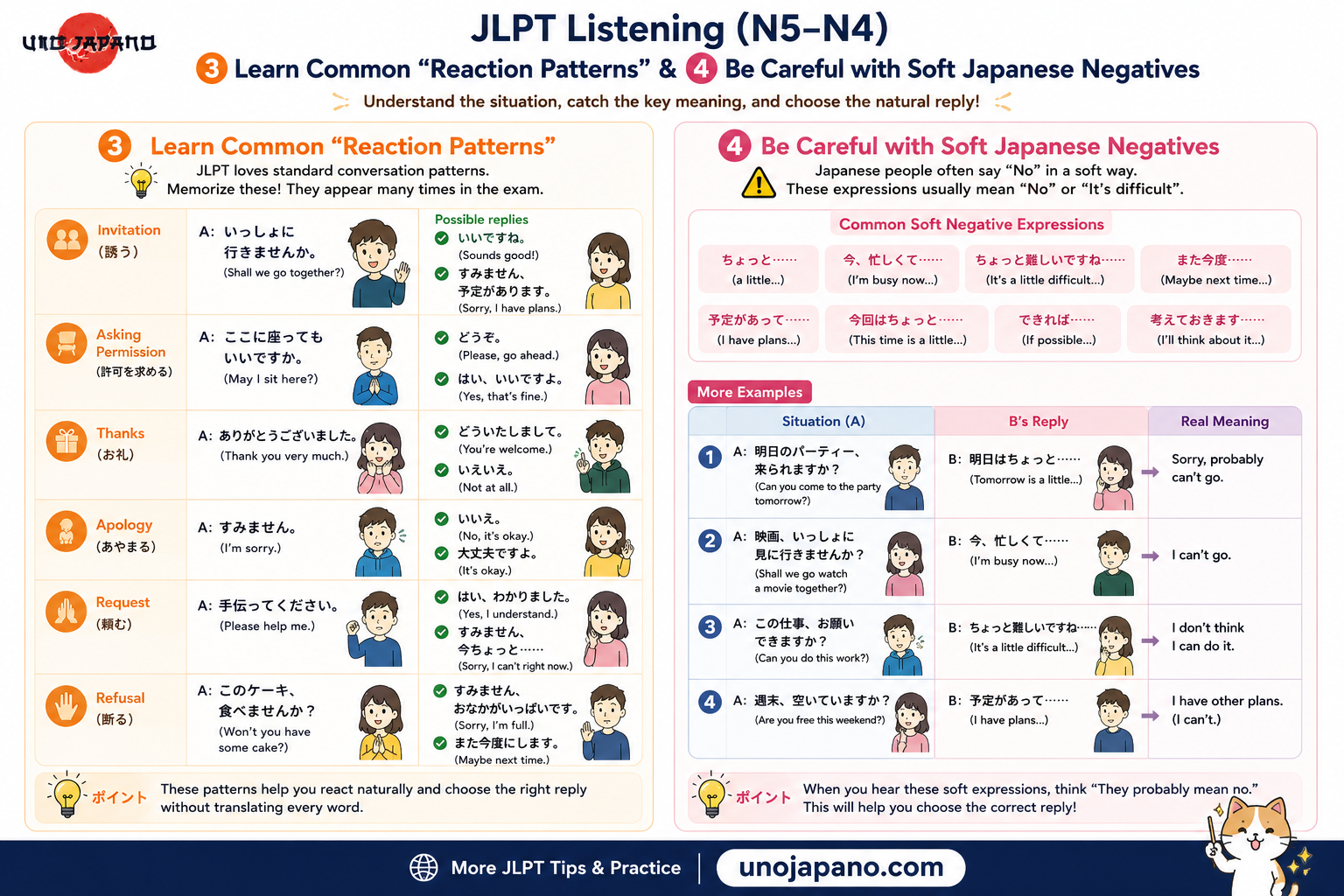
3. Learn Common “Reaction Patterns”
JLPT N5–N4 loves standard Japanese conversation patterns.
If you memorize these patterns, listening becomes much easier.
Invitation Pattern
A:
「いっしょに行きませんか。」
Possible replies:
- 「いいですね。」
- 「すみません、予定があります。」
Asking Permission
A:
「ここに座ってもいいですか。」
Replies:
- 「どうぞ。」
- 「はい、いいですよ。」
Thanks
A:
「ありがとうございました。」
Reply:
- 「どういたしまして。」
Apology
A:
「すみません。」
Replies:
- 「いいえ。」
- 「大丈夫ですよ。」
Request
A:
「手伝ってください。」
Replies:
- 「はい、わかりました。」
- 「すみません、今ちょっと……」
4. Be Careful with Soft Japanese Negatives
Japanese people often avoid direct “No.”
Instead, they use softer expressions.
This is a very common JLPT trap.
Example
「明日のパーティー、来られますか。」
Answer:
「明日はちょっと……」
Literal meaning:
“Tomorrow is a little…”
Real meaning:
“Sorry, I probably can’t go.”
This indirect style appears very often in Japanese listening exams.
Common soft refusals:
- ちょっと……
- 今忙しくて……
- 難しいですね……
- また今度……
Usually these mean:
“No” or “Probably impossible.”
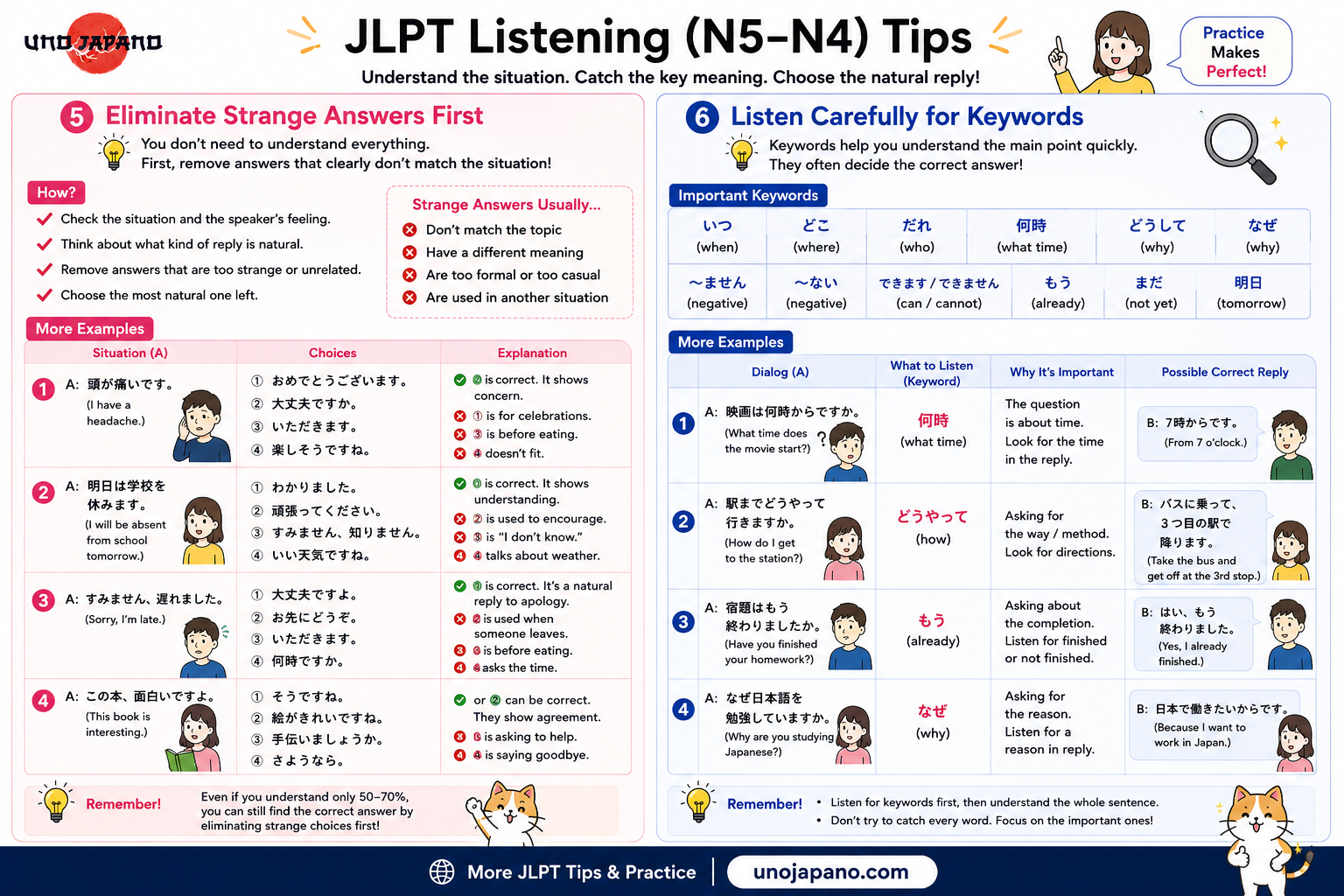
5. Eliminate Strange Answers First
Sometimes you do not fully understand the conversation.
That is okay.
First, remove answers that clearly do not match the situation.
Example
A:
「頭が痛いです。」
Wrong replies:
- 「おめでとうございます。」
- 「いただきます。」
Possible correct reply:
- 「大丈夫ですか。」
Even without perfect understanding, you can often find the strange answer quickly.
This improves your score a lot.
6. Listen Carefully for Keywords
Certain words are extremely important in JLPT listening.
Especially:
| Japanese | Meaning |
|---|---|
| いつ | when |
| どこ | where |
| だれ | who |
| 何時 | what time |
| どうして | why |
| ません | negative |
| できない | cannot |
| 明日 | tomorrow |
| もう | already |
| まだ | not yet |
These words often decide the correct answer.
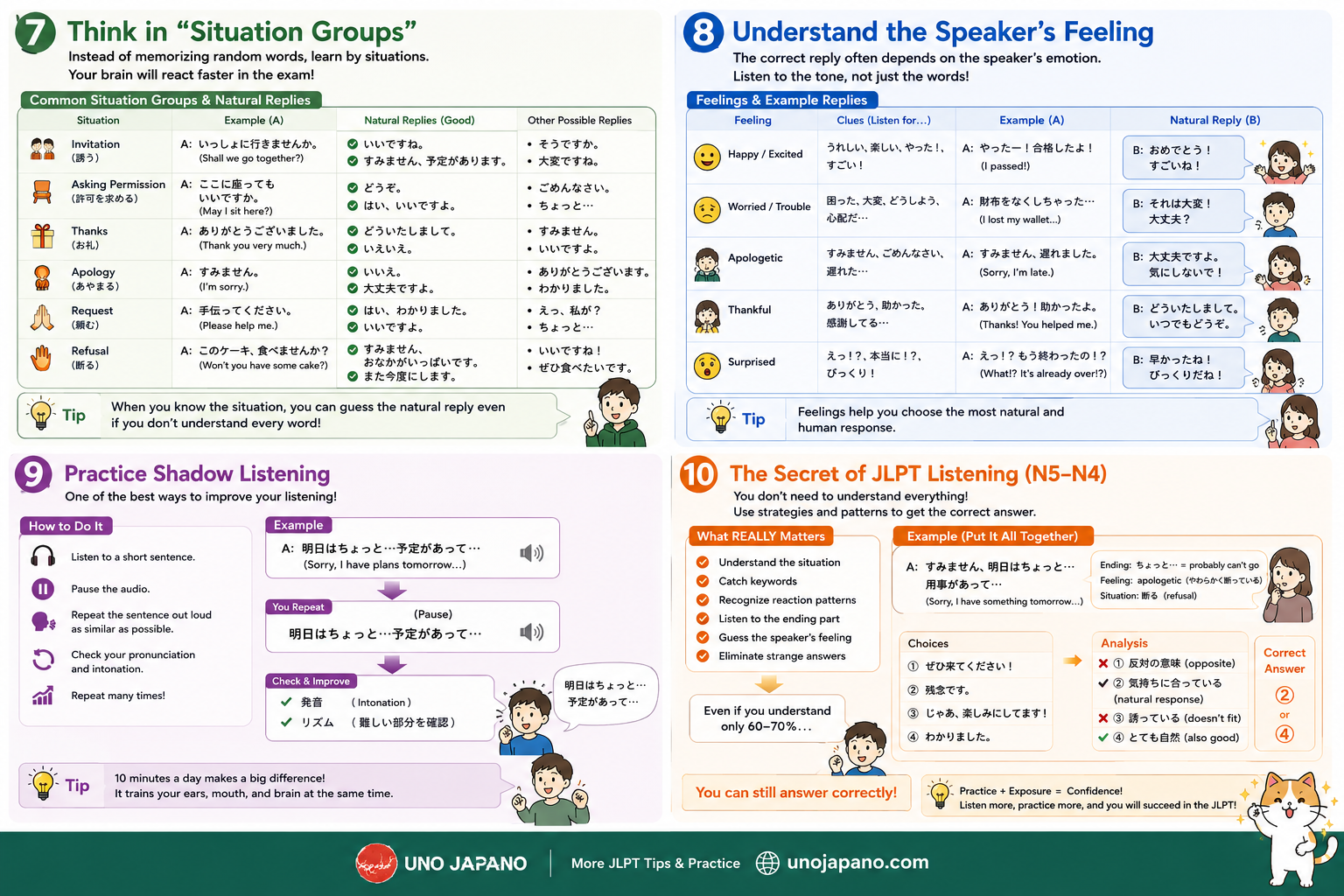
7. Think in “Situation Groups”
Instead of memorizing random vocabulary only, study conversations by situation.
For example:
| Situation | Common Reply |
|---|---|
| 誘う (invite) | いいですね |
| お礼 (thanks) | どういたしまして |
| あやまる (apology) | 大丈夫ですよ |
| 頼む (request) | わかりました |
| 断る (refusal) | すみません、ちょっと |
This helps your brain react faster during the exam.
8. Understand the Speaker’s Feeling
Sometimes the correct answer depends on emotion, not vocabulary.
Listen for:
- happy
- surprised
- worried
- apologetic
- thankful
Example
「すみません、遅れました。」
The speaker feels apologetic.
Natural reply:
- 「大丈夫ですよ。」
NOT:
- 「おいしそうですね。」
9. Practice Shadow Listening
One powerful method for beginners is:
- Listen
- Pause
- Repeat the sentence aloud immediately
This trains:
- listening speed
- pronunciation
- natural Japanese rhythm
- reaction patterns
Even 10 minutes daily helps a lot.
10. The Secret of JLPT Listening
Many learners think:
“I must understand every word.”
Actually, many high scorers still miss some words.
The real key is:
- understanding the situation
- catching keywords
- recognizing natural Japanese reactions
Even if you understand only 60–70%, you can still answer correctly.
That is exactly what JLPT listening tests.
Final Advice
For N5–N4 listening practice:
Do NOT study only vocabulary lists.
Also practice:
- natural replies
- daily conversation patterns
- Japanese reaction phrases
- indirect expressions
- invitation / request / apology situations
Once you become familiar with these patterns, the 「返事」 section becomes much easier.
P/s: It’s very kind of you to share our Website but not only the screenshot. Thank you.
Join us for latest JLPT Answers at:
1/ Telegram Channel https://t.me/japanesefreedashboard/
2/ Telegram Group Chat https://t.me/freejapanesetalk/
3/ Facebook Channel https://www.facebook.com/unojapano/
4/ Facebook Community https://www.facebook.com/groups/unojapano/
5/ Follow us via Twitter https://x.com/unojapano/




One Comment